mloz: A Highly Efficient Machine Learning-Based Ozone Parameterization for Climate Sensitivity Simulations
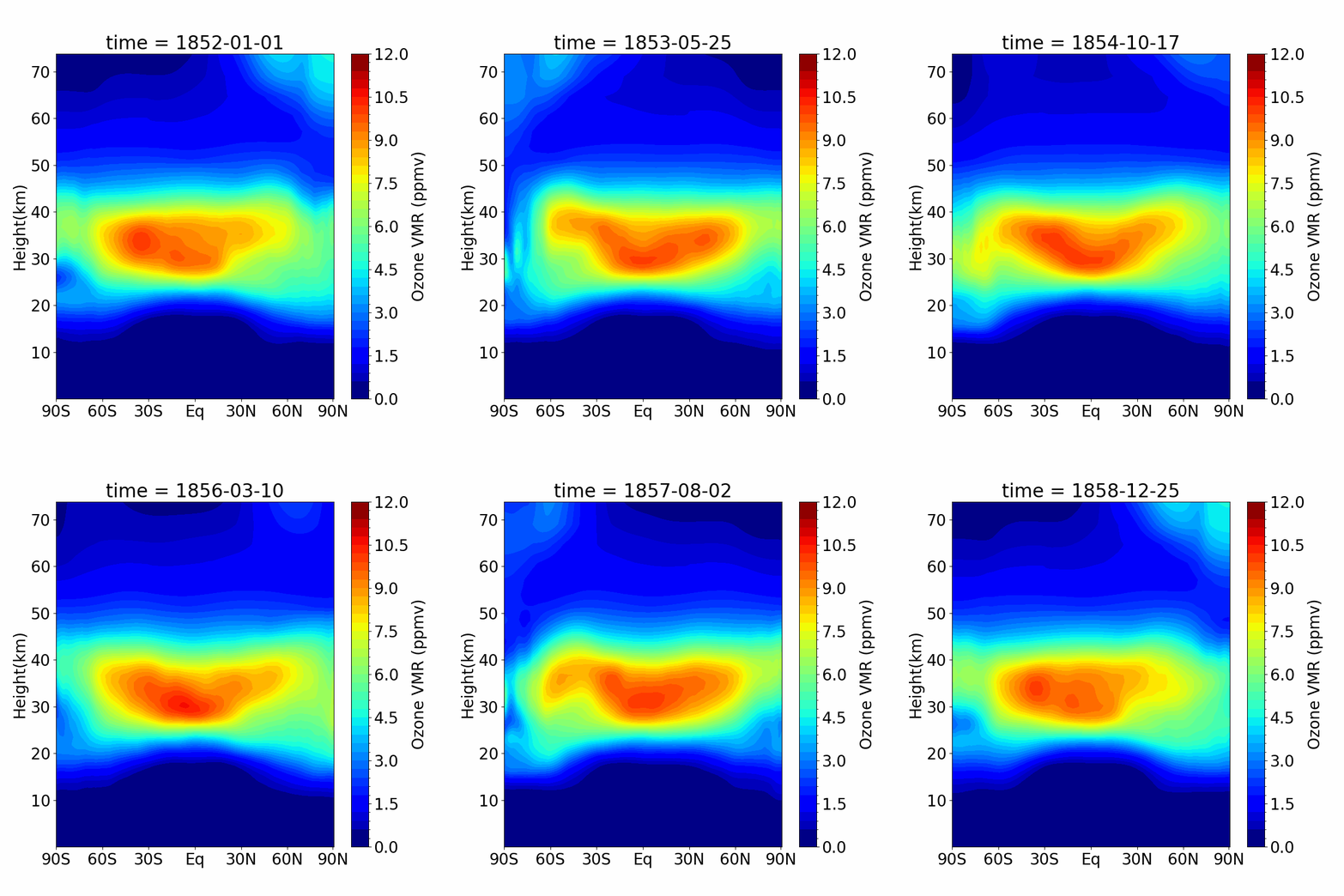
A paper titled “mloz: A Highly Efficient Machine Learning-Based Ozone Parameterization for Climate Sensitivity Simulations”, led by PhD student Yiling Ma from our group, has recently been published in the Journal of Advances in Modeling Earth Systems (JAMES). Around two-thirds of the climate models participating in CMIP6 still lack an interactive representation of ozone due to the high computational costs of atmospheric chemistry schemes. In this paper, we introduce a machine learning parameterization (mloz) to interactively model daily ozone variability and trends across the troposphere and stratosphere in standard climate sensitivity simulations (piCTRL and abrupt-4xCO2). We demonstrate its high fidelity on decadal timescales and its flexible use online across two different climate models—the UK Earth System Model (UKESM) and the German ICOsahedral Nonhydrostatic (ICON) model. With atmospheric temperature profile information as the only input, mloz produces stable ozone predictions ∼31 times faster than the chemistry scheme in UKESM, contributing less than 4% of the respective total climate model runtimes. In particular, we also demonstrate its transferability to different climate models without chemistry schemes by transferring the parameterization from UKESM to ICON. This highlights mloz's potential for widespread adoption in CMIP-level climate models that lack interactive chemistry for future climate change assessments, particularly when focusing on climate sensitivity simulations, where ozone trends and variability are known to significantly modulate atmospheric feedback processes.